
Investments
Operators who invest.
Direct private equity, control and significant minority, taken deal by deal, with co-investment alongside partners who commit their own capital. In some situations we also advise. Value is created inside the business, by operators, and the work starts in the first month. We invest to grow a business quickly and drive it to a return, not to hold it.

Investment Criteria
What we buy, and what we decline.
Published criteria cost us the deals that do not fit. That is what they are for. Owners and intermediaries can read this page and know within a minute whether a conversation is worth either side's time.
Core sectors
Business Services
Revenue that recurs because the service is worth renewing, not because the contract is hard to exit. We look for fragmented categories where a disciplined operator can consolidate demand and hold margin through a cycle.
Energy
Assets and services across conventional and transition energy, underwritten against the commodity cycle we can observe rather than the one we would prefer. Contracted cash flow and creditworthy counterparties come before growth.
Real Assets & Infrastructure
Physical assets with contracted or regulated revenue and predictable replacement cycles. We underwrite the asset first and the operating company second.
Industrials & Manufacturing
Precision manufacturers and specialty processors holding a defensible position in a supply chain. Capital projects that pay back inside the ownership period, not after it.
Situations
- Founder transitions
- An owner ready to step back from a business that still needs an owner. We buy control with continuity. The name, the people, and the obligations stay, and management that wants to remain can hold equity alongside us.
- Corporate carve-outs
- Divisions that were never the parent's priority. We do the separation work on systems, contracts, management, and transitional services rather than assume it away in the model.
- Structural dislocation
- A category repriced by regulation, rates, or a supply-chain reset, where the business is sound and the situation is not. We take the time to tell those two things apart.
- Inflection points
- A company that has outgrown its capital structure, its systems, or the span of its management, and needs an owner who has been through that transition before.
What we don't do
The list below is shorter than the list of things we will look at, and more useful.
Passive minority stakes without governance
If we cannot influence outcomes, we are the wrong holder of the position and someone else will pay more for it.
Turnarounds that require a market to recover
We underwrite the business as it trades today. A recovery thesis is an outcome we will accept, never one we will pay for.
Broad auctions decided on price alone
Where the highest number wins and the buyer is interchangeable, we are a poor use of a seller's time. We compete on certainty, terms, and what happens after closing.
How we work
Three ways a transaction reaches us.
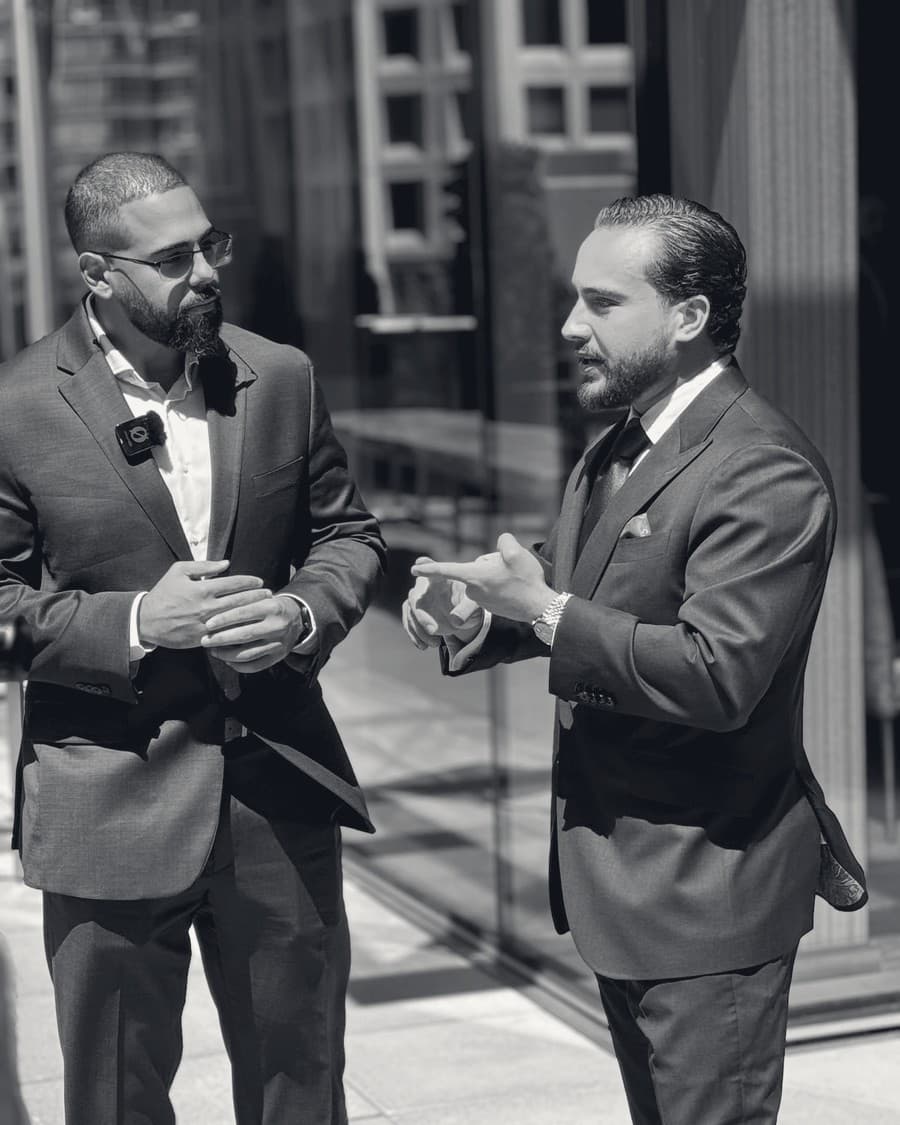
With founders
Control with continuity.
We buy control and keep what made the business work. Management that wants to stay, stays, and can roll equity into the next chapter. Reporting is built once and built properly rather than imposed as a quarterly tax. The first months are spent learning the business from the people who run it, not restructuring it from a spreadsheet.
With sponsors
Co-investment and execution.
We co-invest deal by deal where our sector knowledge or operating capacity adds something a sponsor does not already hold. We will take the operating seat when it is asked of us, and we are content to follow when the lead is the right one. Our diligence is our own; we do not underwrite by inheritance.
With family offices and institutions
Direct opportunities, on the same terms.
For family offices and institutions investing directly, we act as an originator and an operating partner rather than a fund manager. Four things are on offer, and they can be taken separately.
- Direct opportunities
- Transactions we have originated and are underwriting ourselves, shown before they are broadly marketed.
- Co-investment
- Participation alongside our own capital, on the same terms and the same timeline as our position.
- Portfolio company support
- Operating and transaction support for companies already held, including succession, add-on acquisitions, and capital structure work.
- Structures
- Single-asset vehicles, syndicated participations, and cross-border arrangements built for the transaction rather than borrowed from a fund template.
Transaction credentials available upon request.